Trauma Queen SVG: A Designer’s Take on Bold Embroidery
As an embroidery designer who has spent countless hours staring at digitized paths and testing stitch-outs on various fabrics, I have learned that a design’s success isn’t just about how it looks on a screen. It is about how it translates into thread, how it withstands the wash cycle, and whether it resonates with the person wearing or using the final product. Recently, I evaluated the Trauma Queen Svg for potential use in my own craft business and client projects. This isn’t just another cute phrase; it is a statement piece that requires careful handling to ensure it lands correctly in the realm of professional Crafts and Graphics.
First Impressions and Visual Personality
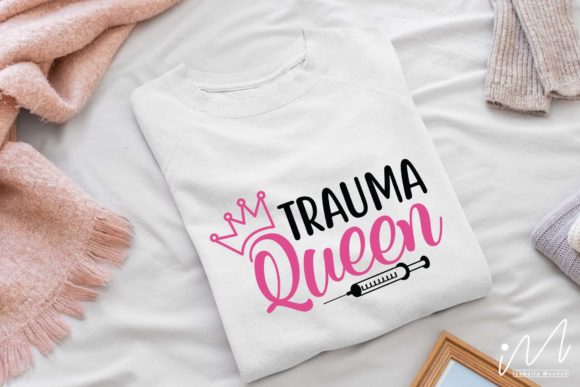
When I first opened the file, the immediate mood was one of defiant humor mixed with resilience. The phrase “trauma queen” carries a specific cultural weight, often used ironically to reclaim personal narratives. Visually, the layout needs to balance readability with attitude. Since this is provided as an SVG Cut File, along with DXF, EPS, and PNG formats, the initial assessment focuses on line quality and scalability. For embroidery, clean lines are non-negotiable. If the vector paths are jagged or overly complex, the digitizing process becomes a nightmare, leading to excessive jump stitches or thread breaks.
The visual personality of this design suggests it belongs on items that are meant to be seen and discussed. It is not a subtle background element. It demands attention. This makes it ideal for custom apparel where the wearer wants to express a bit of edge. However, because it relies heavily on typography, the font choice inherent in the SVG—or the one you choose to pair it with if you are modifying the design—will dictate the entire vibe. A handwritten script might soften the blow, while a bold sans-serif amplifies the sarcasm.
Real-World Application: The Tote Bag Test
To truly understand how Trauma Queen Svg performs, I imagined a real-life scenario: creating a custom embroidered tote bag for a local boutique client. Tote bags are popular handmade products, but they present unique challenges. The fabric is often canvas or heavy cotton, which has a distinct texture. If the design is too small, the texture of the weave can swallow the details. If it is too large, it becomes stiff and uncomfortable to carry.
In this context, the design works best when scaled to fit a standard 5x7 or 6x10 hoop, depending on the bag size. I would recommend using a fill stitch for any solid elements to ensure coverage, but being mindful of stitch density. Too dense, and the bag will pucker; too light, and the underlying fabric shows through, ruining the crispness of the text. For a project like this, the ability to change the color in appropriate software is crucial. A stark white thread on a natural canvas creates high contrast, making the message pop, while pastel tones might get lost in the fabric grain.
Versatility Across Product Lines
Beyond tote bags, this design has significant potential in other areas of commercial embroidery. Consider sweatshirt embroidery. A crewneck sweatshirt provides a stable, thick surface that handles heavier stitch counts well. Placing the design on the left chest offers a subtle nod to the theme, while a large back print makes a bold fashion statement. For Etsy sellers and small shop owners, this versatility is key. You can offer the same design across multiple product types, maximizing your return on investment for the digital asset.
However, caution is needed with baby embroidery or delicate items. While the phrase might appeal to millennial parents with a sense of humor, the fabric choices for baby items are usually thin and stretchy. Applying a heavy design like this to a onesie requires a robust stabilizer strategy and potentially lighter stitch types, such as a running stitch outline rather than a full fill, to prevent stiffness against sensitive skin. Similarly, for embroidered patches, the design must be digitized with a satin stitch border to prevent fraying, adding another layer of technical consideration.
Technical Challenges and Fabric Considerations
One of the most critical aspects of using Trauma Queen Svg is understanding where it should be used carefully. Text-based designs are unforgiving on curved surfaces like caps or hats. The distortion caused by the curve can make letters appear uneven. If you plan to use this for headwear, you must adjust the pull compensation in your digitizing software to account for the fabric stretch and curvature. Additionally, dark fabric requires an underlay stitch that matches the garment color to prevent the base fabric from peeking through the top threads, which can muddy the appearance of the text.
Another concern is thread colors. Since the design allows for color changes, experimentation is encouraged. However, high-contrast combinations work best for legibility. Avoid pairing similar shades, such as dark blue thread on black fabric, unless you are aiming for a tonal, subtle effect that might be missed from a distance. Always test the design on scrap fabric first. This simple step saves time and materials, ensuring that the hoop size and tension settings are correct before committing to a final finished product.
Enhancing Brand Value and Customer Trust
For creative entrepreneurs, the quality of the embroidery reflects directly on brand consistency. A poorly stitched Trauma Queen Svg can look amateurish, while a clean, crisp execution elevates the perceived value of the item. Customers trust handmade goods that show attention to detail. When the letters are evenly spaced, the edges are sharp, and the fabric lies flat, it signals professionalism. This builds buyer engagement and encourages repeat business.
Using this design in printable mockups or digital previews can also boost sales. Showcasing the design on various backgrounds helps customers visualize the final item. Whether it is a holiday gift for a friend who appreciates dark humor or a personalized gift for a self-care enthusiast, the presentation matters. Ensure that your marketing images highlight the texture and quality of the stitching, not just the graphic itself.
Final Designer Notes
Before integrating Trauma Queen Svg into your workflow, remember to check the licensing terms. While the file formats provided (SVG, DXF, EPS, PNG) offer flexibility for cutting and printing, commercial use rights for embroidery may vary. Always confirm whether you can sell finished items or if the license is limited to personal use. Additionally, since this is a vector-based graphic, you will need to digitize it specifically for machine embroidery unless you are using a hybrid approach with cut vinyl.
In summary, this design is a powerful tool for those who understand the technical nuances of embroidery. It fits naturally into the world of modern Crafts, offering a blend of humor and style. By respecting the limitations of different fabrics, choosing the right stabilizers, and paying attention to stitch density, you can transform a simple SVG into a high-quality, sought-after item. Whether you are an experienced machine embroidery veteran or a hobbyist looking to expand your skills, Trauma Queen Svg offers a compelling challenge and reward for your next project.